Trending

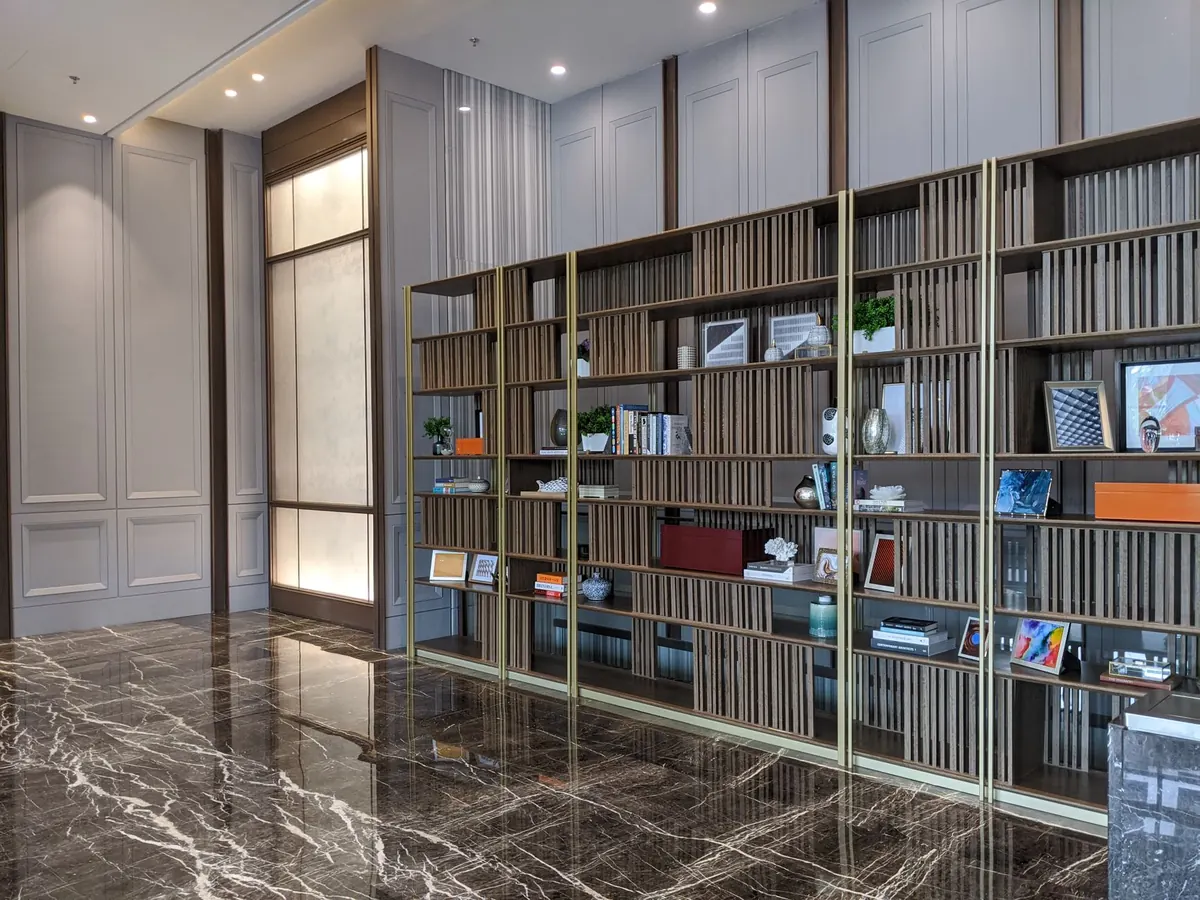
Open shelving is honest furniture. Nothing hides behind a cupboard door, so every object you place there becomes part of the room. That is exactly why it goes wrong so often. A shelf turns into a landing strip for post, keys, a half-read paperback and a cold mug, and within a fortnight the whole wall looks like a jumble sale.
The answer is not more baskets. It is a run of small decisions: what earns a place, how objects sit beside each other, and how much bare shelf you are prepared to leave alone.
Decide what the shelf is for before you style it. A kitchen shelf holding the plates you use every day has a different brief from a living room shelf that exists mostly to be looked at. Storage-led shelves need easy access and a repeated shape. Display-led shelves can afford more variety.
Say out loud the three things the shelf must do. "Hold cookbooks. Show two bowls. Not become a dumping ground." That sentence will settle most of the arguments you are about to have with yourself.
The eye likes clusters. Single objects dotted at regular intervals along a shelf read as scattered, no matter how handsome each one is. Grouping gives them a reason to be there.
A reliable method:
Three is a starting point, not a law. Five small objects can work as one group if they share a material or a colour. Two can work if they differ wildly in size. What matters is that the group reads as a single object from across the room.
Within a group, and along the shelf, avoid a flat line of tops. If every item is the same height the shelf looks like a warehouse. Let one group rise, the next sit low, and the third hold the middle ground.
Negative space is the most effective tool here, and the hardest to accept. A bare shelf end looks like a mistake while you are arranging it and like confidence when you step back.
As a working rule, keep roughly a third of each shelf clear. Not necessarily in one block — though a clear gap at one end is often the most elegant solution — but the total empty surface should feel deliberate rather than leftover.
If you cannot bear the gaps, ask what you would remove if a guest were arriving in ten minutes. That is usually the right answer permanently.
Books are the backbone of most open shelving, and also where clutter creeps in. A shelf of vertical spines, all the same depth, is calm. Add paperbacks shoved at angles, a leaning tower and a stack of magazines, and it frays.
Some practical moves:
A plant softens hard lines and introduces a colour no cushion can match. It also drops leaves, needs water, and dies quietly in a dark corner if you choose the wrong spot.
Rule of thumb: one plant per shelf, and only where the light suits it. A trailing plant on the top shelf works beautifully, because the growth hangs down into the space below and does some of the negative-space work for you. A stiff upright plant on a low shelf just blocks whatever sits behind it.
If the light is poor, a small ceramic vase with dried stems gives a similar silhouette with none of the maintenance. Rotate fresh flowers in when you have them.
A styled shelf is not a colour-coordinated display. Aim for balance rather than sameness.
Anchor the arrangement in two or three colours and let the rest be neutral. Wood, white ceramic, glass and black metal will sit quietly with almost anything. Then repeat one accent — a deep green, a warm terracotta, a single blue bowl — two or three times across the shelf. Repetition is what makes it look intentional rather than accidental.
If a shelf feels frantic, the likely culprits are too many strong colours and too many different materials. Remove one colour and one texture, then see how it settles.
Styled shelves are not static. Objects migrate. The trick is a short, regular tidy rather than a big annual overhaul. Once a week, take two minutes to return what has drifted and remove anything that arrived and never left.
Clear the shelf completely. Wipe it. Put back only the pieces you have decided to keep, grouping as you go, and stop while a third of the surface is still bare. Step back three paces. If your eye lands on one object first, that is your lead piece — give it room.
Then leave it alone. The point of open shelving is not to prove you can style it. It is to keep the things you love visible, and everything else out of sight.
Photo: Riandy Saputra / Pexels